Sanctuary of Maria Santissima del Soccorso
Details
The Church of the Madonna del Soccorso in Poggio San Marcello is an important place of worship located in the heart of the village, in the province of Ancona. Its history is rooted in the 14th century, when Marian devotion began to spread thanks to the Order of the Augustinians.
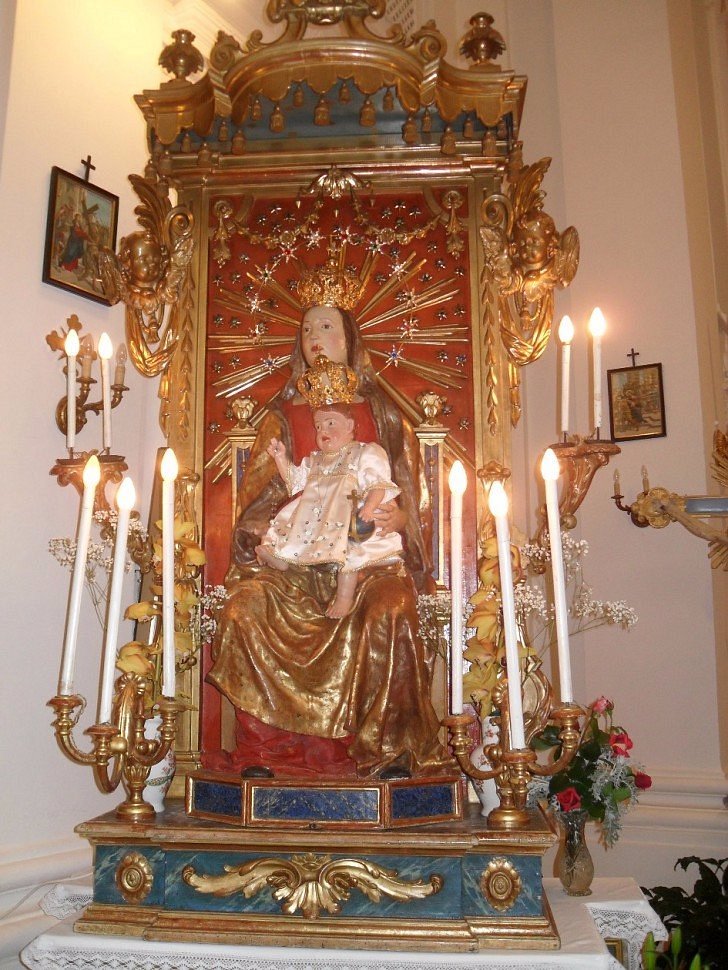
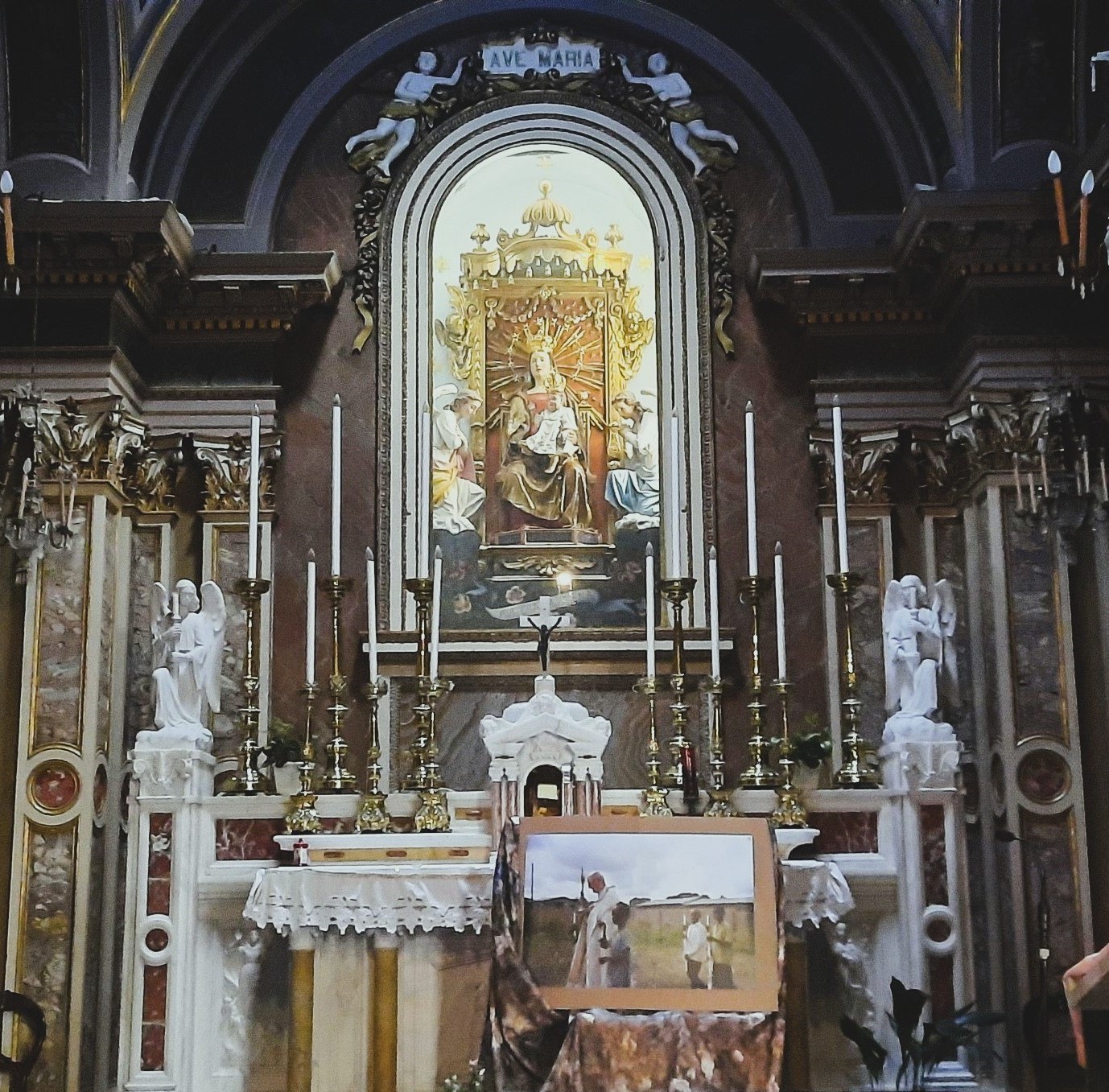
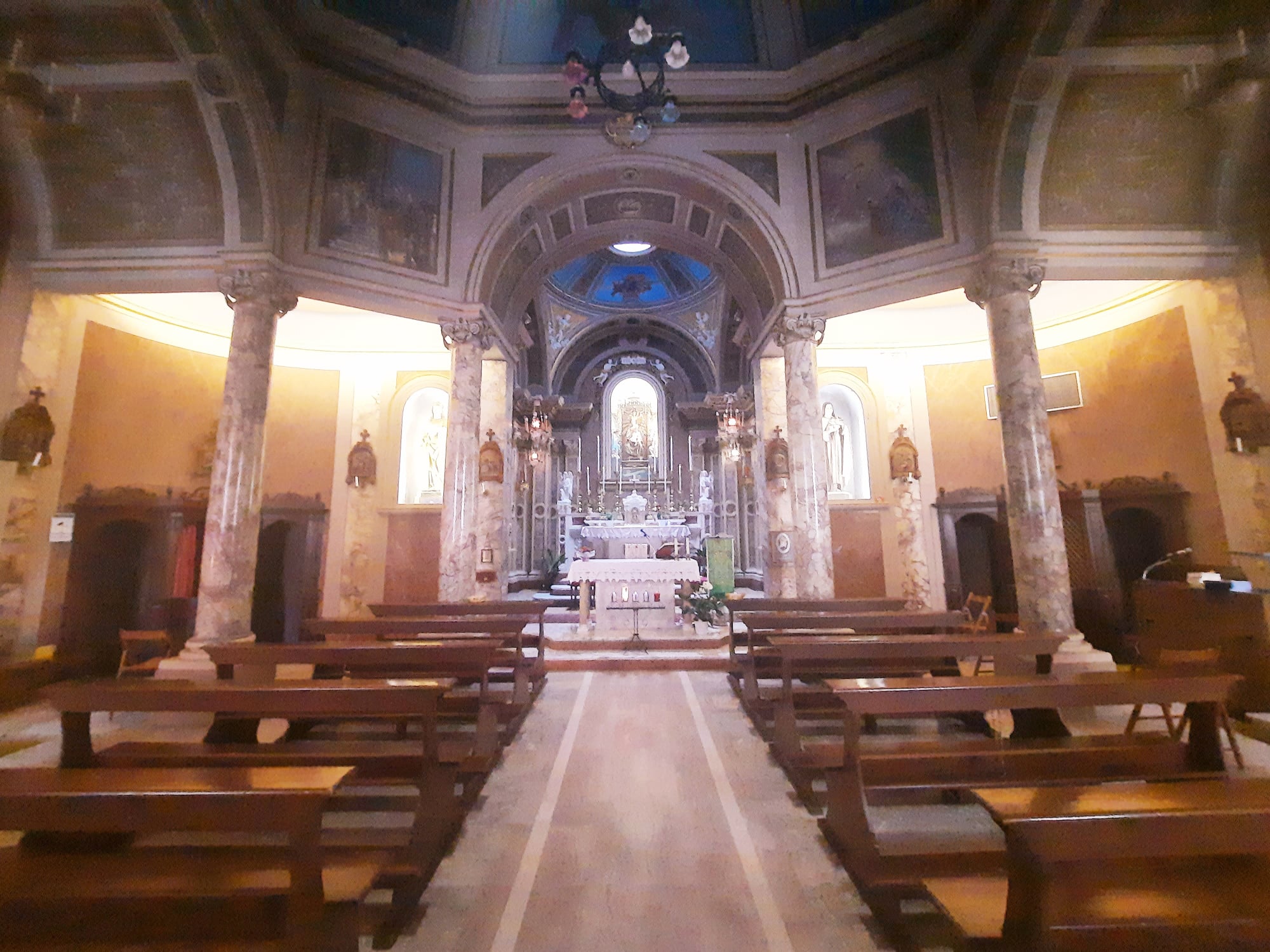
The current building, constructed in the 17th century to replace a previous church located outside the walls, is distinguished by its particular oval plan and the elegant frescoes that decorate the interiors, painted in the first decades of the 20th century. The focal point of the church is the high altar, where the revered wooden statue of the Madonna del Soccorso with the Child is kept, commissioned in 1608 and always the object of profound popular devotion.
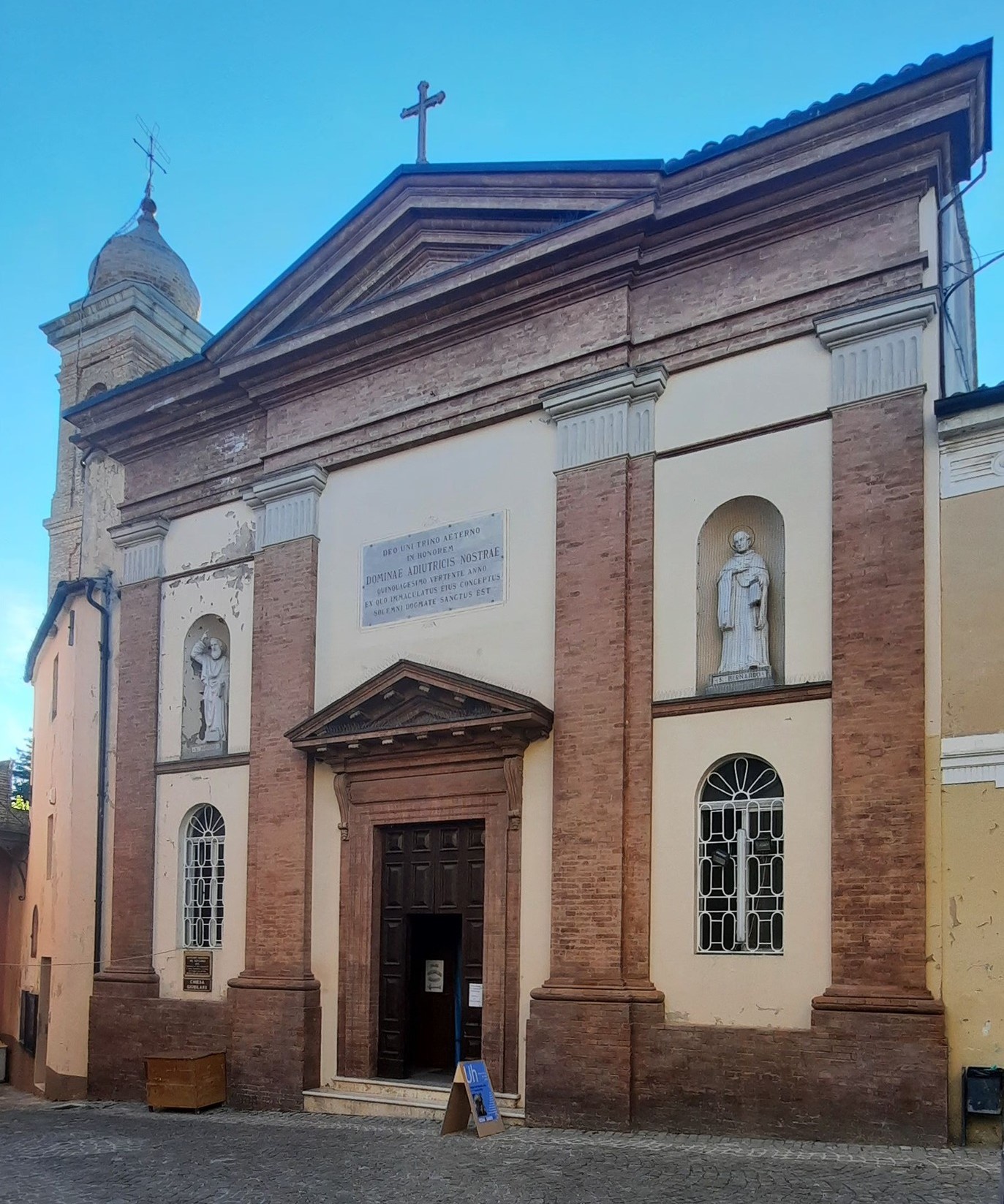
Furthermore, in the late 19th century, Father Costantino Bramati, in agreement with the architect Santini of Jesi, obtained the bishop’s approval for the project that transferred the façade of the Sanctuary’s church from the modest entrance on the north to the current solemn façade on the east, facing the square that already bore the Sanctuary’s name. The original rectangular plan of the Church was transformed into an octagon with a small dome supported by columns, thus acquiring its current shape. The façade has a central portal surmounted by a pediment and an inscription bearing a dedication to God the Best and Greatest for the memorable undertaking, and two niches with statues of saints in the finely crafted lateral bands.
The wooden image of the Madonna was restored in 1820, a date inscribed on the back of the sculpture provides proof of this. One hundred years later, in 1991, the statue underwent its final restoration supervised by Archpriest Don Maurizio Fileni, who returned it to the faithful on the second Sunday of May during the “centenary” celebrations. For more than a century now, Poggio San Marcello has paid its greatest honor to the Madonna del Soccorso on the second Sunday of May with a festival in her honor.
The celebrations, in truth, begin on the first Sunday of May with a procession and the transfer of the Madonna’s statue to the larger Church of San Nicolò da Bari. Throughout the preceding week, there are prayer meetings, and on the Saturday afternoon preceding the festival, there is the blessing of the children. On the evening of the same Saturday, the Church fills up again for the “Men’s Mass.” On the morning of the second Sunday in May, the bells begin ringing in celebration at six o’clock; Eucharistic celebrations follow one after the other every hour, welcoming the faithful of Poggio San Marcello and the neighboring towns. In the afternoon, the procession takes place with the Statue of the Madonna del Soccorso, which is carried on shoulders through the streets of the town, with the banner (Gonfalone) leading the way. The day of celebrations concludes late in the evening with the inevitable fireworks. Finally, on the last Sunday of May, with a late evening procession, the statue of the Madonna del Soccorso is repositioned in its place behind the altar of the Sanctuary.
Gallery


Santuary of Our Lady of Help
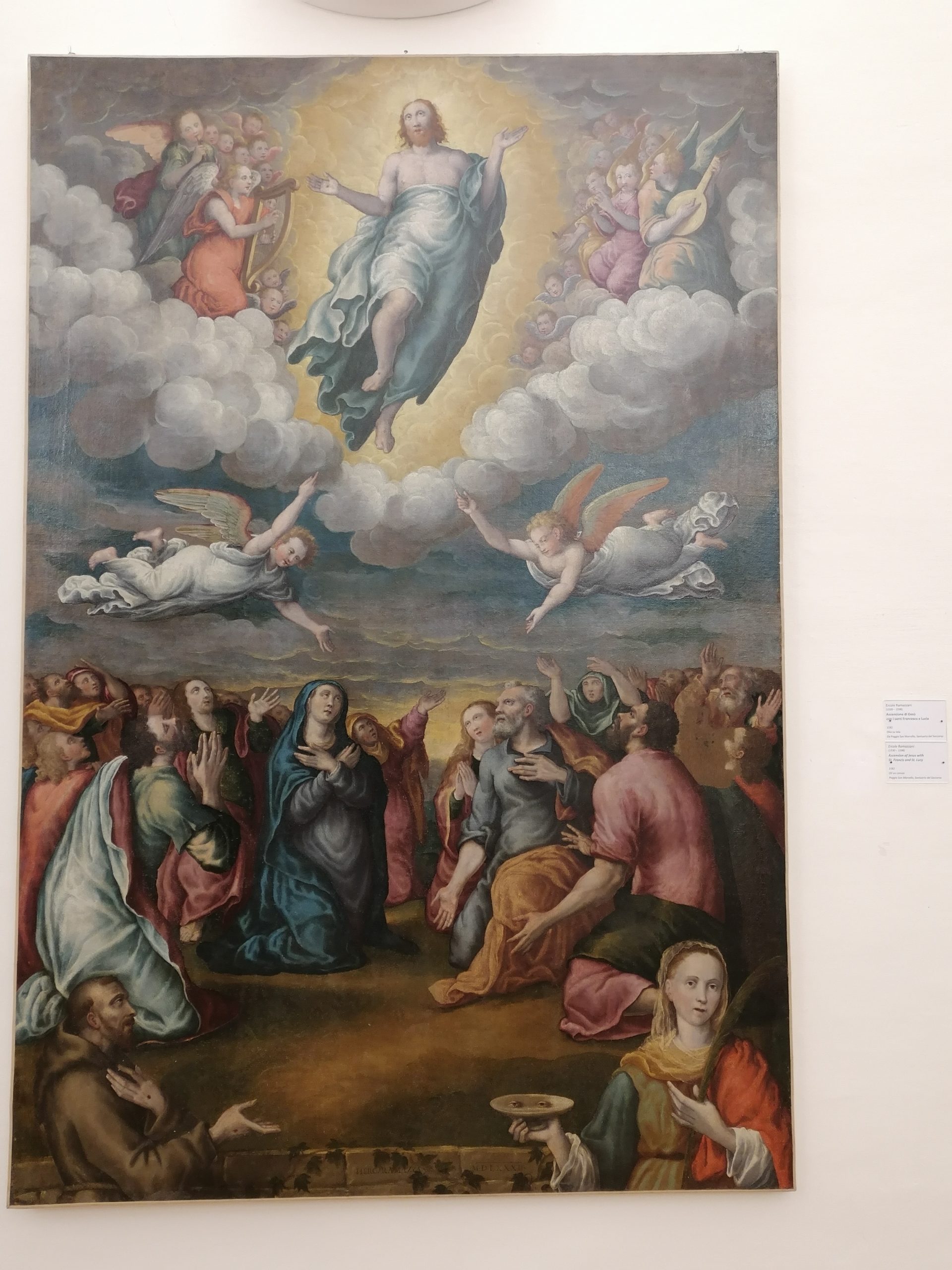
The church has an oval layout; on the eight columns with capitals, four arches rise, behind which is the main altar housing the statue of the Madonna. Two other side altars originally housed two paintings by Ramazzani, but now they are adorned with statues. Above the arches, the dome-shaped vault curves, culminating in a skylight. Above the sacristy is the seat of the confraternity of the Gonfalone; a wooden staircase leads to the bell tower.
The building has a square front topped by a small triangular pediment, positioned in alignment with the central section of the façade. Here, there is the portal with frames and a pediment that projects outward from the masonry surface, resting on small consoles in the shape of dolphin backs. The lateral parts are characterized by a brick base, serving as a stylobate for the pair of pilasters placed on either side of the portal. Between the pilasters, two windows open in the lower section, while in the upper part, two niches contain statues. The presence of a statue of St. Augustine in one of the niches is not accidental, as the devotion to the Virgin under the title "of Help" was introduced in Italy by the Augustinians starting in the 1300s. The other statue represents St. Benedict.
The crowning of the façade consists of a tall brick architrave, which corresponds to the base.
The devotion to Our Lady of Help originated within the Order of Augustinians in Sicily in the 1300s. In 1524, a church dedicated to Our Lady of Help was built outside the walls of Poggio San Marcello, officiated by the namesake confraternity. In 1605, Pope Paul V, a devotee of Our Lady of Help and already Bishop of Jesi, favored, with a papal bull, the affiliation of the Confraternity of the Most Holy Sacrament with the Roman Confraternity of the Gonfalone. It was in 1608 when a wooden statue of the Madonna was sculpted to facilitate her procession.
In 1646, due to the precarious structural condition of the church, the Confraternity decided to build a new one within the castle, which was completed in 1652. In the same year, the statue of the Madonna was moved to the new church. The new church had four altars: the main altar where the Madonna's statue was placed, and three side altars dedicated to the Ascension, Saint Charles, and Saint Roch.
In 1776, the bell tower was erected on the right side of the church, overlooking the small square of the Madonna and Piazza Giacomo Leopardi. A brick with the engraved date attests to the period of the bell tower's construction. The wooden statue of the Madonna was restored in 1820, as indicated by the engraved date on the back of the sculpture.
In 1881, Don Costantino Bramati, newly consecrated as a priest, requested and received permission to dedicate his priestly and ministerial service to the Sanctuary of Our Lady of Help. In 1883, he celebrated his appointment as Prior and, at his own expense, had the Madonna's vestments and throne gilded with gold leaf. He also commissioned two gold crowns from the Jesi goldsmith, Ferdinando Novelli, one for the Madonna and the other for the Child.