Church of Saint Nicholas of Bari
Details
HISTORY
By the end of the 12th century, the community of Poggio San Marcello already venerated Saint Nicholas of Bari as its patron, to whom it dedicated an oratory near what was then the only entrance gate to the village (the one that now stands adjacent to the church); taking advantage of a period when the castle and the municipality were developing. The church named after the patron saint arose inside the Castle towards the middle of the following century, while news of the Chapel of San Nicolò is documented from the mid-fifteenth century. The latter underwent a true transformation in the 16th century, as literary sources provide news of the religious building serving as the parish church of the town.
The complete reconstruction (ex novo) was designed in 1763 by Nicola Maiolatesi of Jesi and Mattia Capponi of Cupramontana in the Late Baroque style and built on land adjacent to the previous one, where the small presbytery square now stands. It was consecrated in 1772, although the decorative work continued for over a decade. Following the 1997 earthquake, restoration and consolidation works were initiated, and it was reopened for worship on January 13, 2002.
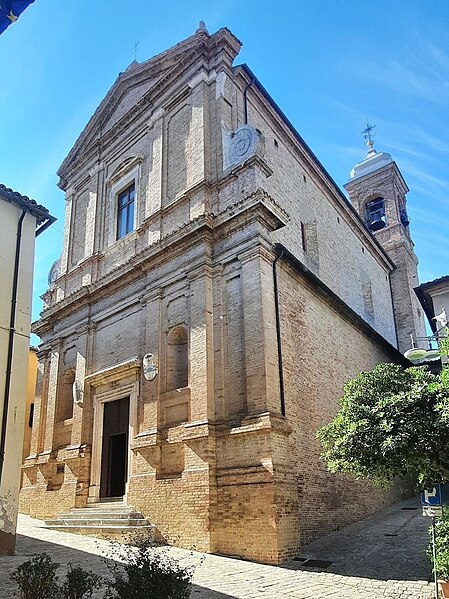
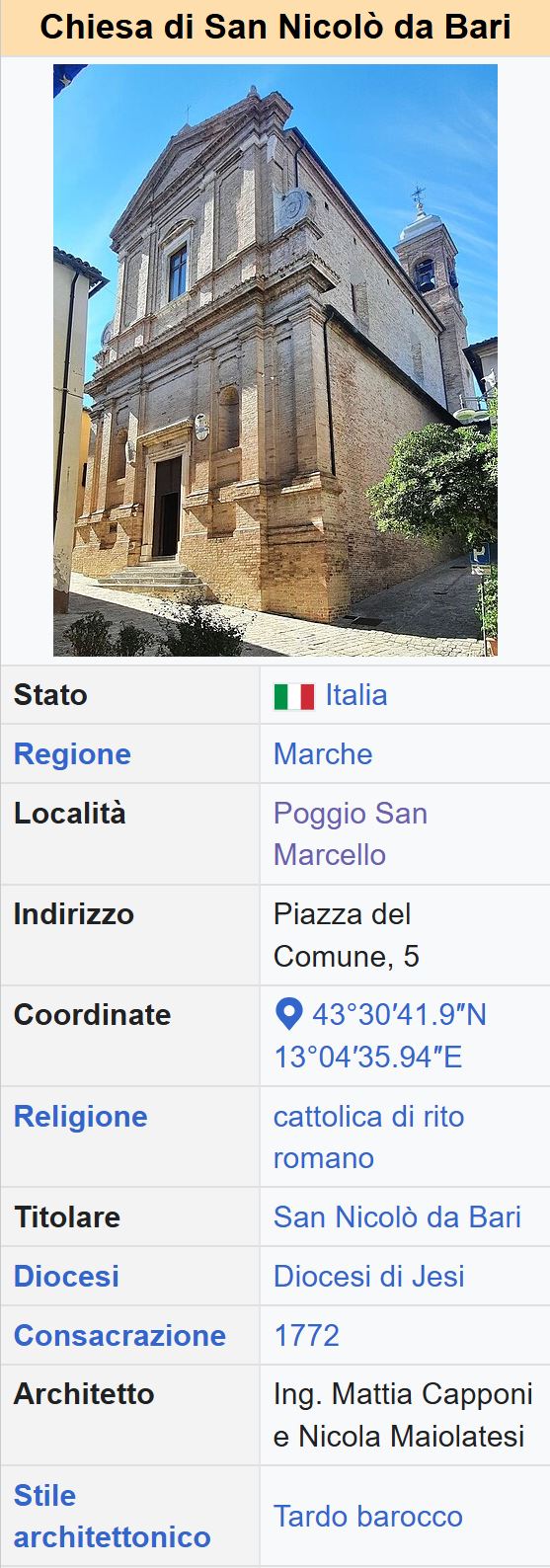
The church stands inside the Castle of Poggio, at the end of the main street facing the Town Hall (Palazzo Comunale). Despite its single-nave plan, it is notable for its considerable size, creating an imposing scenic impact due to its elevation above the small village.
The interior consists of four side altars, dedicated respectively to the Crucifix and the Sacred Heart of Jesus (the two on the left) and to Saint Joseph and the Immaculate Conception (the two on the right).
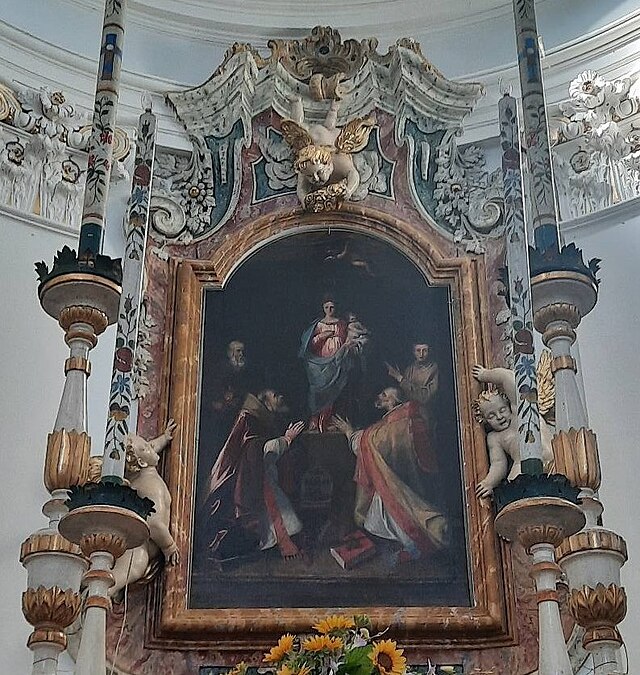
The altarpiece demonstrates the aforementioned preservation of characteristic 17th-century elements: it is the “Madonna with Child and Saints,” the first signed work by the painter from Jesi, Antonino Sarti (1580–1647), dated 1603. To its left is a 14th-15th century fresco depicting the Crucifixion, detached from the ancient Church of San Marcello and now preserved in the parish church.
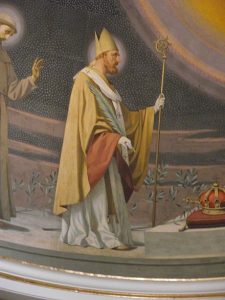
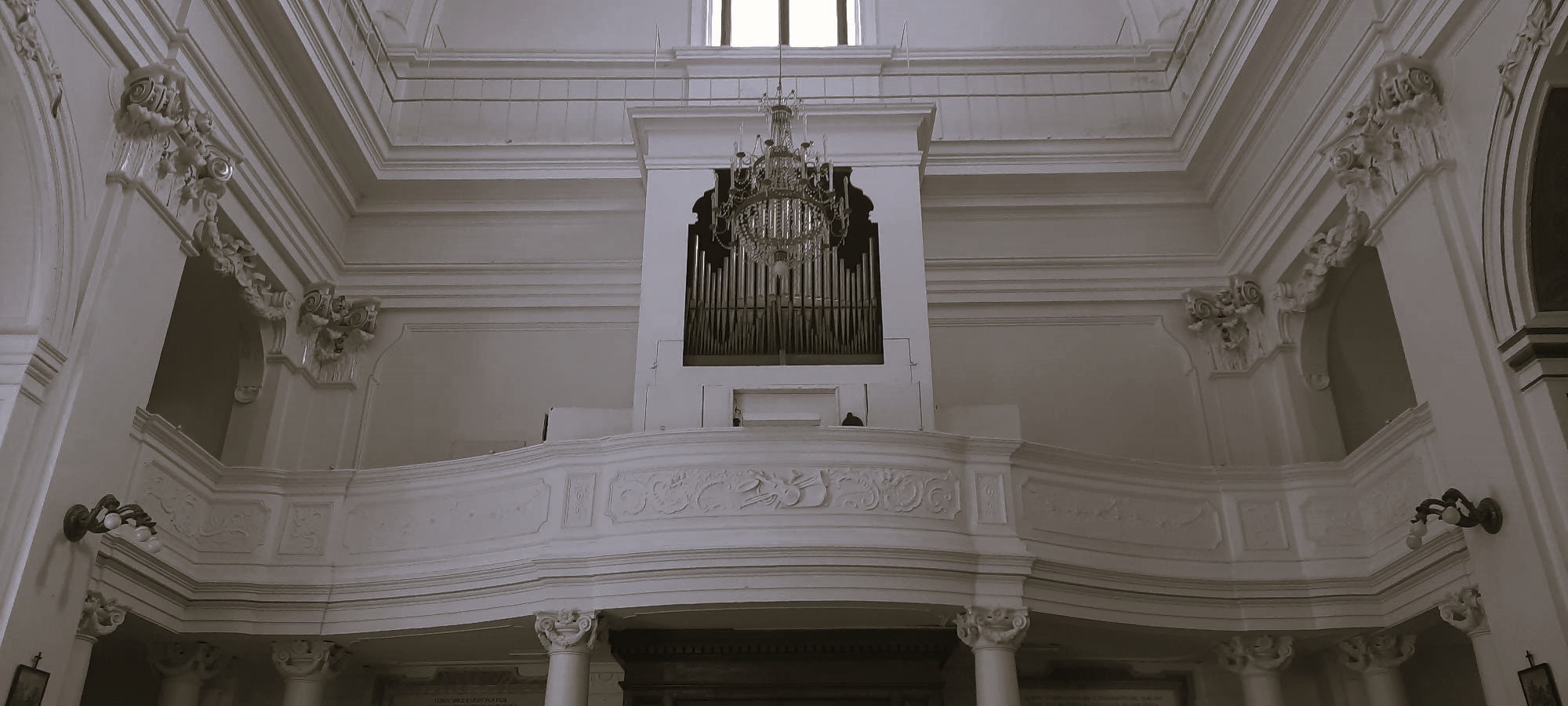
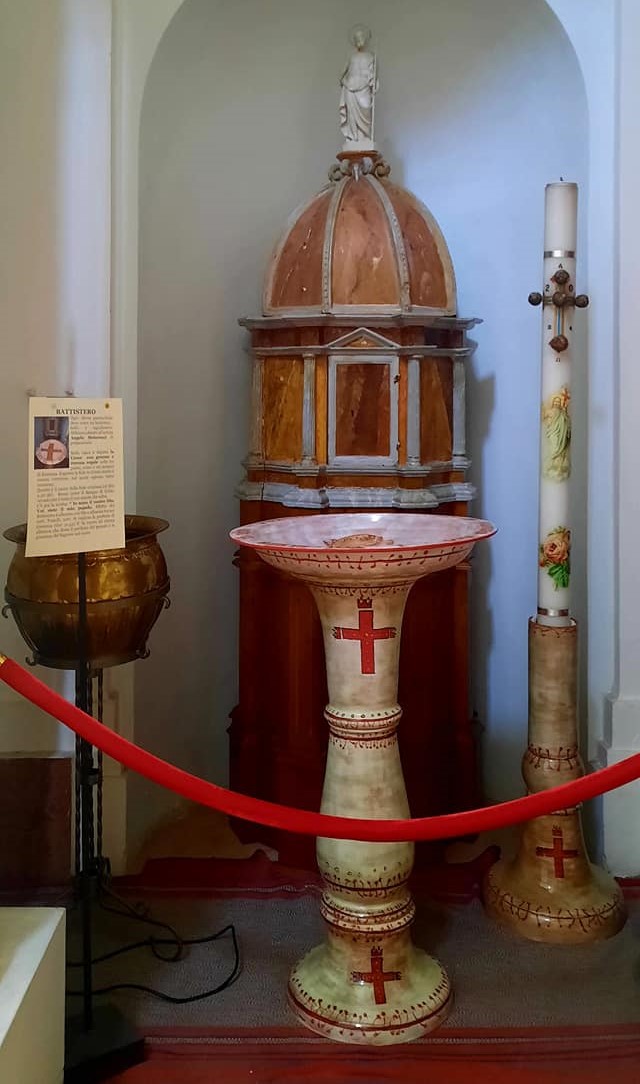
The Baroque interior. The meticulous procedure of restoration and cleaning away the marks of time is visible on the cantoria (choir loft), with a balcony decorated with allegorical and floral motifs, while the baptistery is the work of the Roman sculptor Angelo Melaranci. The baptismal font basin is painted with the Cross adorned with gems and a royal crown: it expresses faith in Christ, dead and resurrected victorious, in whom everyone is immersed during this sacrament.
Passing through the aforementioned San Nicola gate, near the church, one finds the entrance to the 18th-century Gothic crypt on the left. It is used during the Christmas period as a setting representing the Nativity during the living Nativity scene, as well as a venue for temporary exhibitions.
Gallery

Church of San Nicolò: Description
The church is located at the end of the main street, at the corner of the town square, and is completely isolated on all four sides, with an elevated passage connecting it to the rectory. Of particular interest are the proportions of its dimensions: the height is 15 meters, the nave measures 18 meters in length and 9 meters in width; the apse is 6 meters wide, with a radius of 3 meters. Everything was designed in multiples of three, which, in addition to creating a sense of perfect proportion, gives the building an exemplary beauty, a jewel of the new neoclassical architectural style that was spreading at the time.
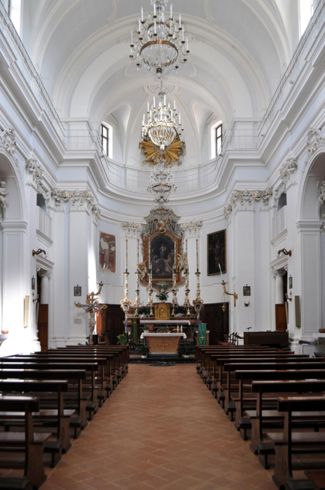
San Nicolò has a single nave with two niches along the sides, pilasters, balconies, and a slightly raised presbytery with an apse. Between the two chapels, inscribed between two pilasters, are the pulpit on one side and a choir on the other, both adorned with garlands. The two sides of the nave are perfectly symmetrical. The pilasters with Corinthian capitals support the architrave, which projects out, similar to the facade.
The barrel vault of the roof and the apse are marked by ribs, interrupted by "nails" to allow the opening of windows. The entablature, which runs along the entire perimeter of the church at approximately half the height, allows access to the windows. It is noted that the internal height of the church is twice the width, and this vertical development enhances the role of light. At the entrance portal, there is a balcony with a sinuous profile that houses the organ; the same profile is repeated along the step that separates the presbytery from the lower floor of the nave. The decorative motif of the concave-convex-concave line is a legacy of Baroque style but takes on its own characteristics in the 18th century with a more sinuous flow.
The rich decoration of the church’s interior is also evident in the numerous stucco finishes and the surface of the pilasters that replicate the various veining of marble. This abundance of decorative elements, the delicate and widespread taste for design, the shaping of materials into seemingly delicate forms, and the use of techniques that imitate even materials once used in their original form, are all characteristics of 18th-century architecture.
The balustrade of the presbytery has a wavy movement, similar but opposite to the parapet of the main choir with the organ, whose flooring is situated halfway between the church floor and the entablature. The main choir, as well as the two choirs near the lateral entrances, is supported by columns.