Town Hall and theatre
Details
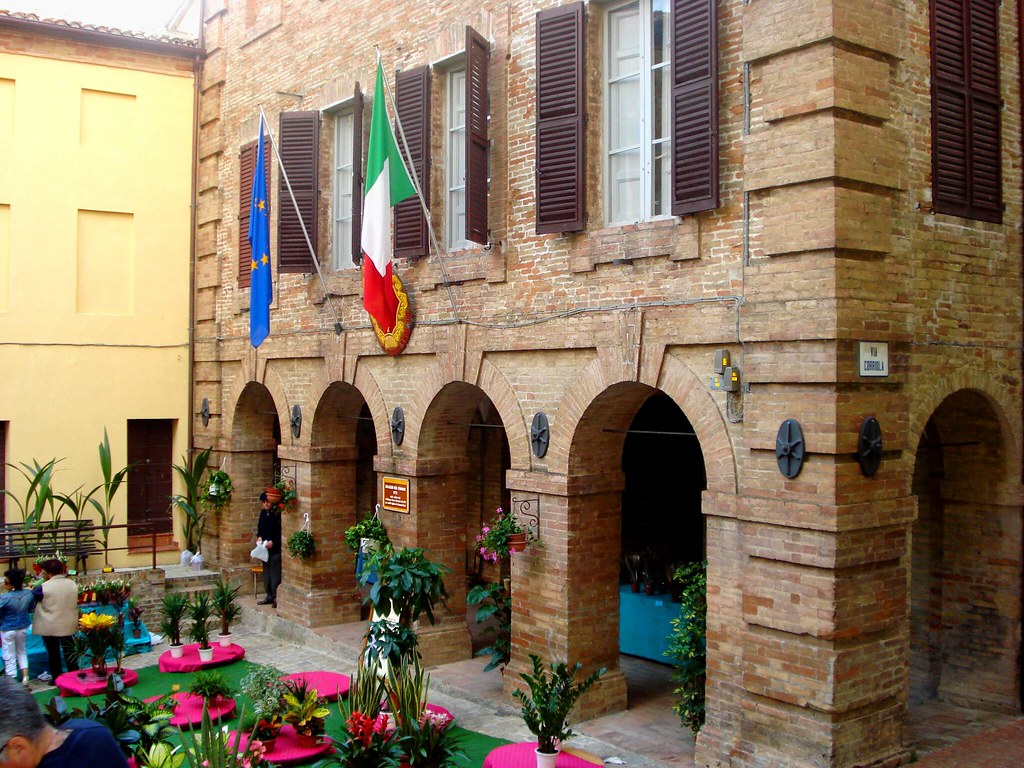
In the lowest part of the town’s interior, near the ancient entrance, stands a two-story building, reconstructed in the 18th century (1700s) by the architect Capponi of Cupramontana; it is the Town Hall (or municipal seat). The façade consists of a four-arch portico that leads to the entrance door.
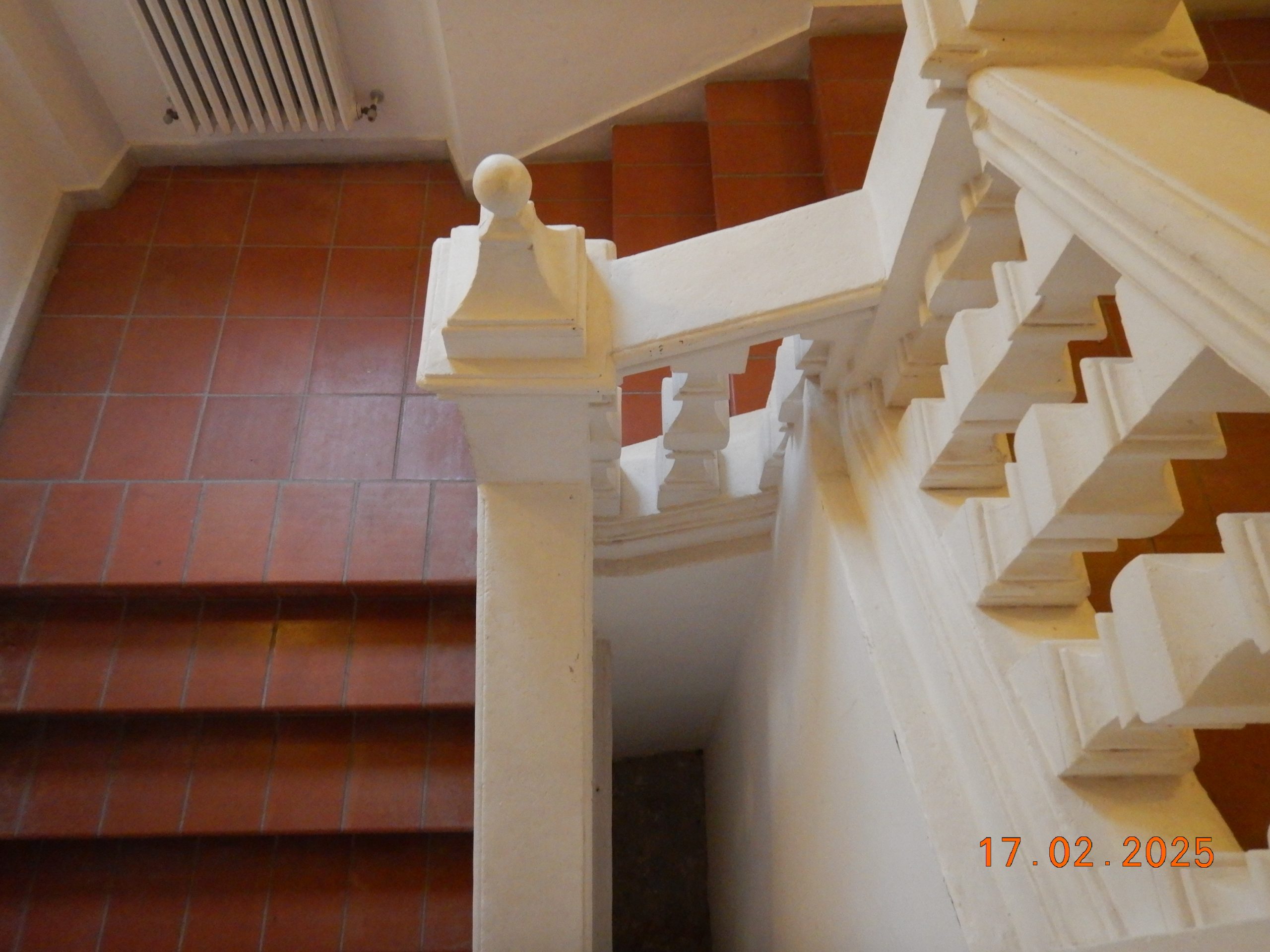
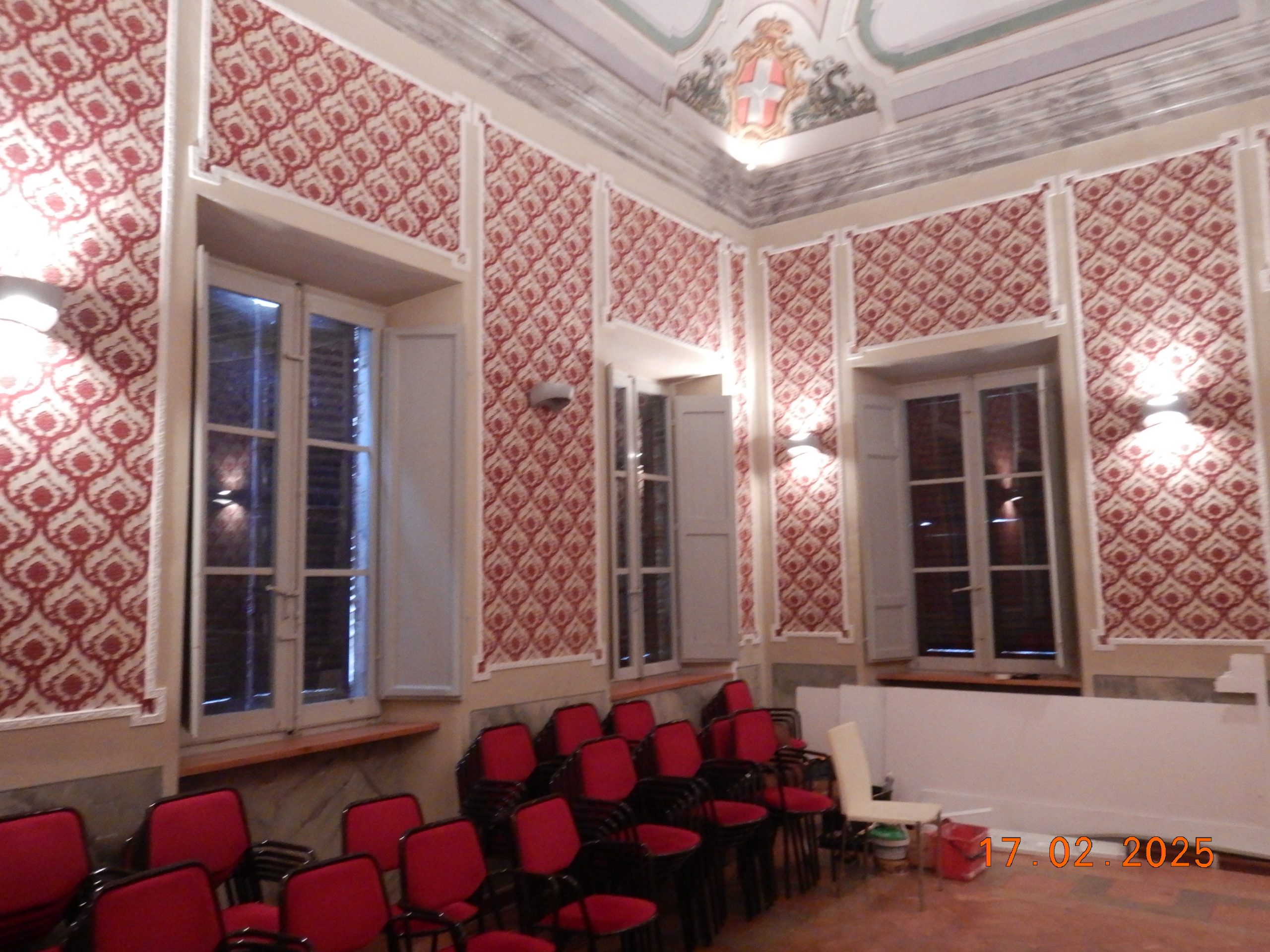
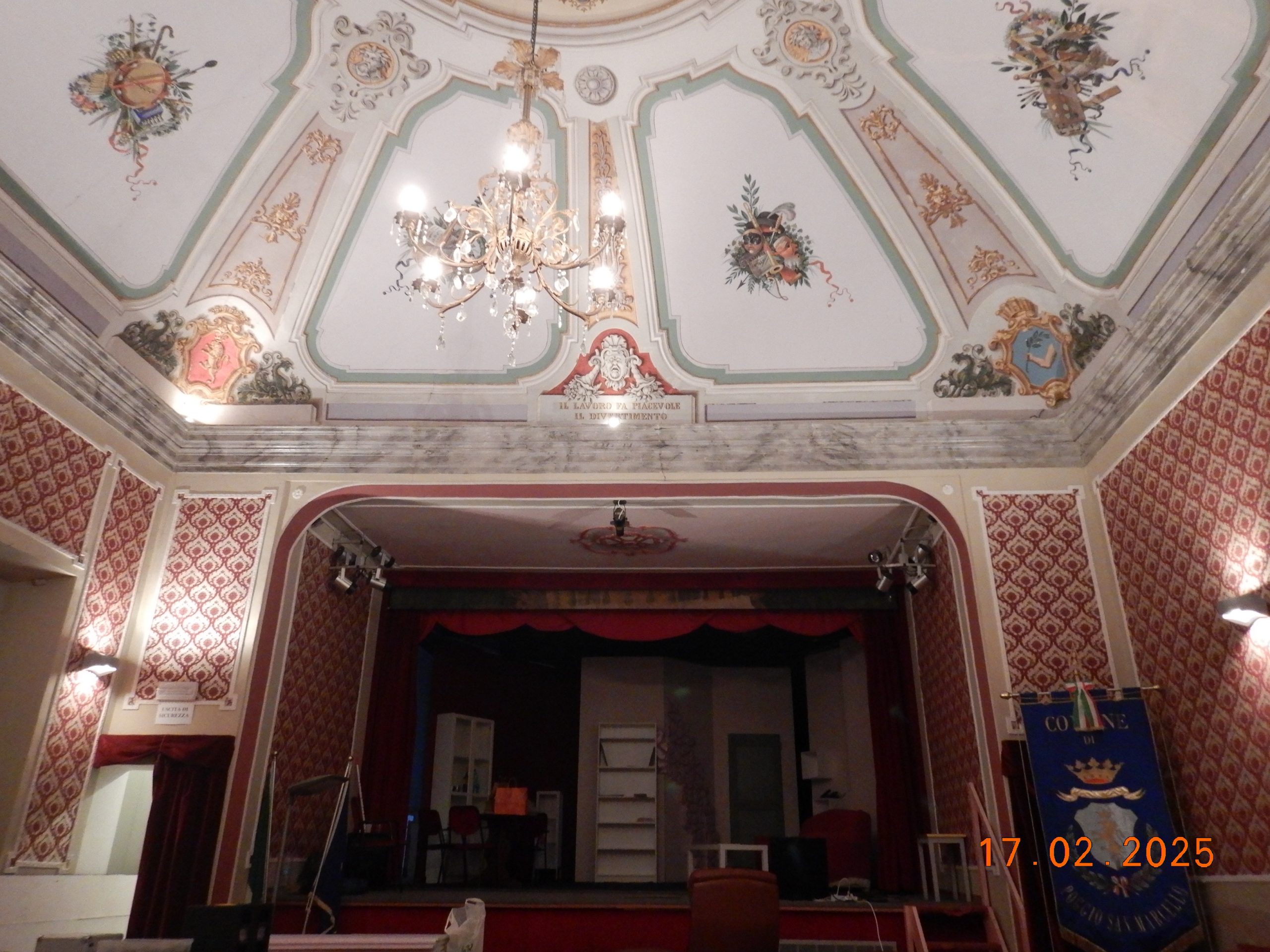
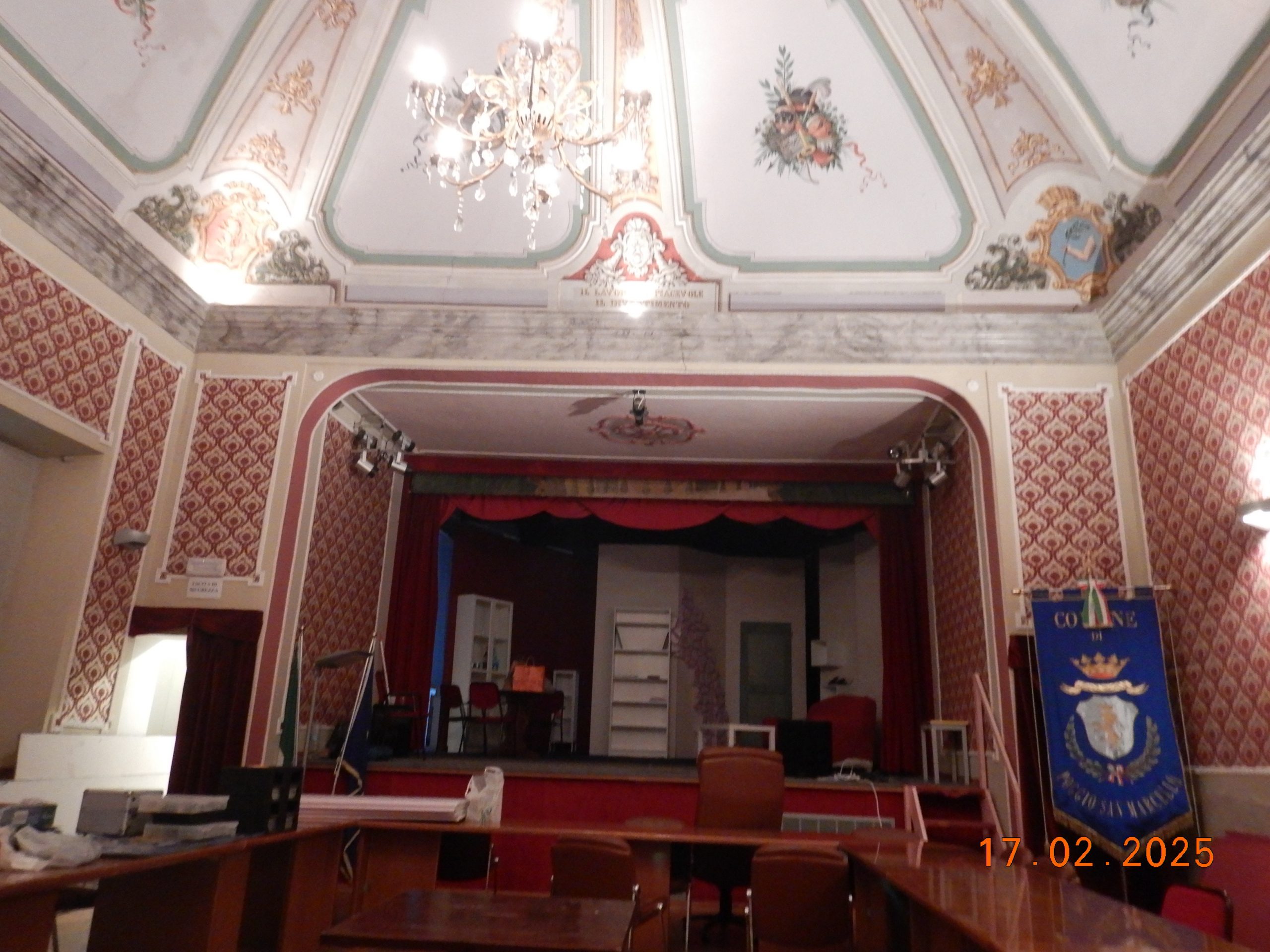
From the ground-floor offices, a staircase guided by an elegant travertine balustrade leads to the first floor, where the mayor’s office and the Council Hall are located, which is large, square, elegant, and ventilated by four windows.
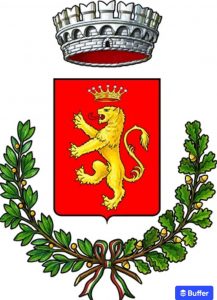
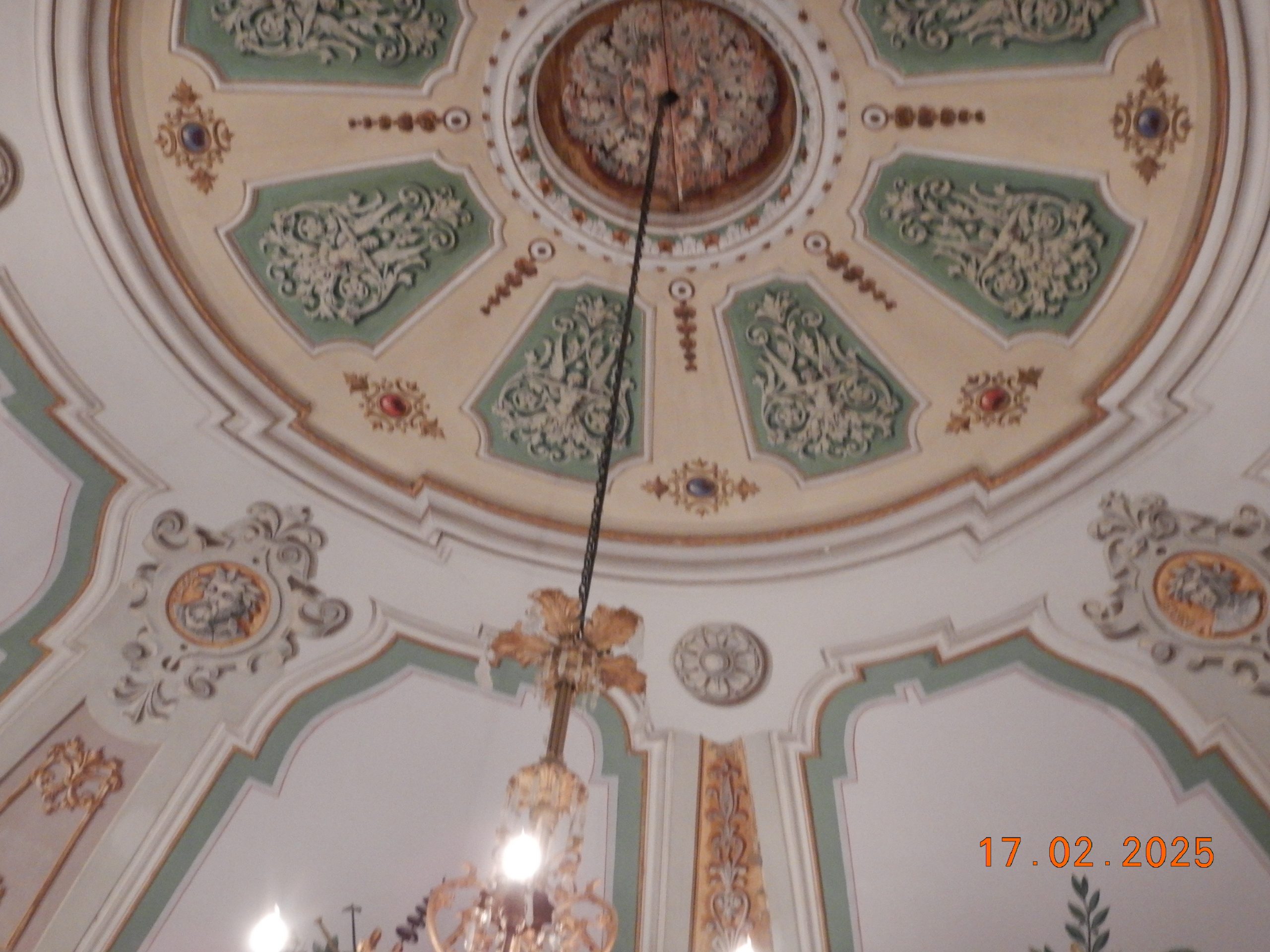
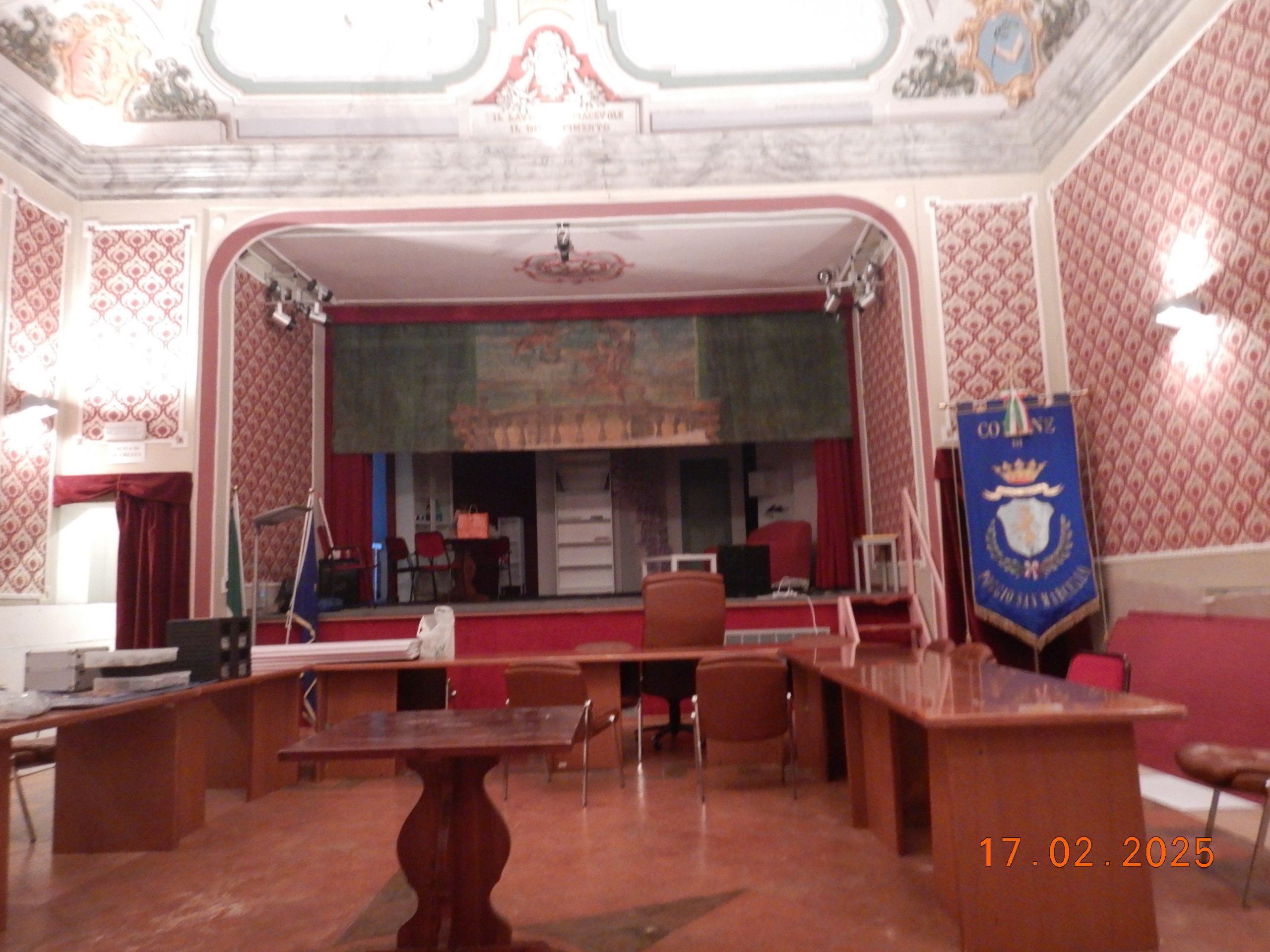
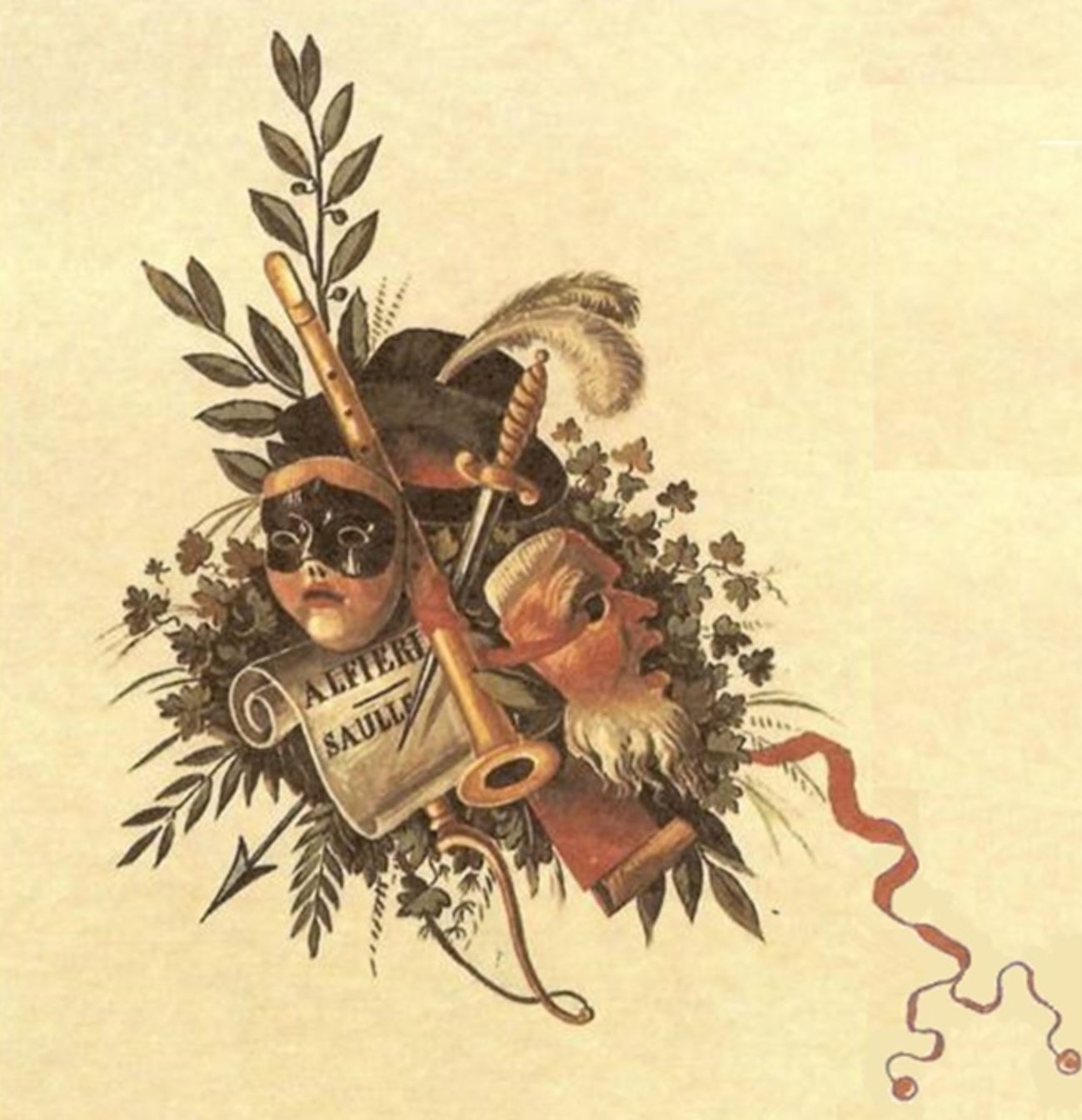
The high, spacious, vaulted ceiling, artistically decorated, features four medallions in the corners: the Savoia Coat of Arms, the Provincial one, the one of the District (Mandamento), and the one of the Municipality (a rampant lion within a floral wreath). In compartments, there appear Strength, Abundance, Science, and Music. Other decorations and mascarons enhance the scenic art. Inscribed on the wall are mottos praising virtue, work, respect for laws, and love. The four medallions representing the Italian poets of the Golden Age are notable.
The flooring of the Council Hall, still in very good condition, was executed with a design, using colored and shaped material, made of excellent clay from the centuries-old local industry dating back to 1738. The hall has an annexed stage, the pride of our ancestors, for performances by companies and jugglers. The recently carried out restoration work has, however, left the façade, the staircase, and the council hall intact.
Gallery


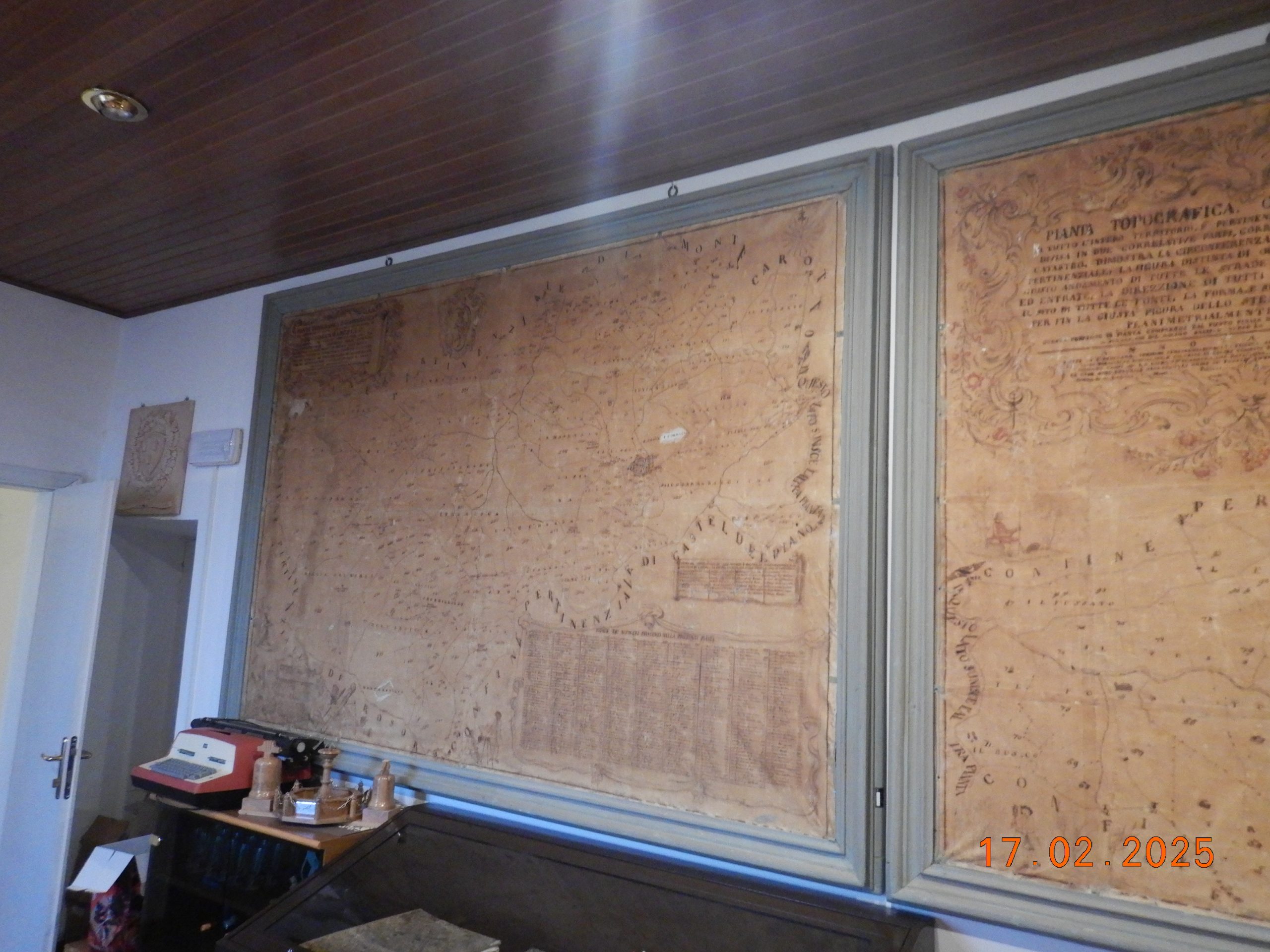
The historical archive of Poggio San Marcello underwent a process of enhancement between the end of 2005 and the beginning of 2006, inspired by the principle of accessibility. The purpose of the intervention was to make the materials preserved in the archive accessible to as many people as possible, turning these items into driving forces for cultural marketing, benefiting this small town in the Marche region, which contains key elements of the area's history, culture, and traditions.
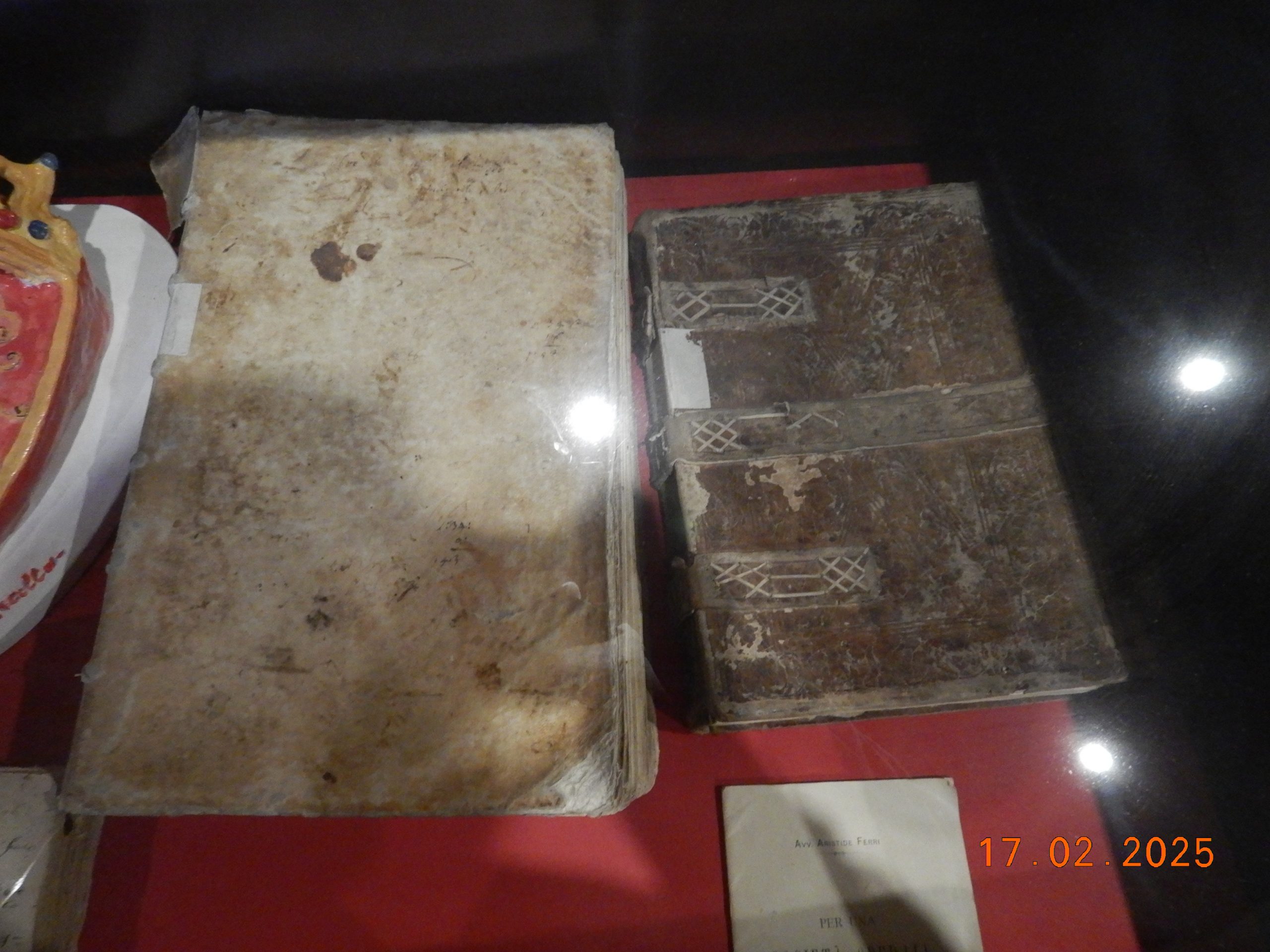
The undeniable value of the documents preserved in the archive was evidenced by their dating, with the oldest volumes dating back to the 16th century and continuing through to the 19th century. The archive allowed visitors to trace the history of the community of Poggio San Marcello, a peripheral but significant town, from a fresh perspective, shedding light on life through the centuries and its contribution to understanding our broader history.
An important first step in the archive’s organization was undertaken in 2001, with the initial cataloging using an open structure and an evaluation of the archive's conservation status. The second phase, carried out between the end of 2005 and the first quarter of 2006, involved placing the volumes in new display supports and digitizing the entire archive using database software.
The digitalization and online accessibility of the archive were motivated by two main goals: on one hand, to make it accessible via the internet, and on the other, to provide a rational and updatable informational foundation for future efforts to further enhance the archive. This would allow the addition of new information on the items in the archive, as well as the ability to create links and relationships with contextual information such as history, traditions, events, critical contributions, historiographical references, and more.